← The Thomas and Bridges Story, 1540–1840
Chapter V: First Thomas to arrive in Virginia
The James Thomas family line in Trigg County, Kentucky descends from John Thomas, who, from all available records was the first Thomas to arrive in America. He landed at Jamestown, Virginia, on May 24, 1610.1
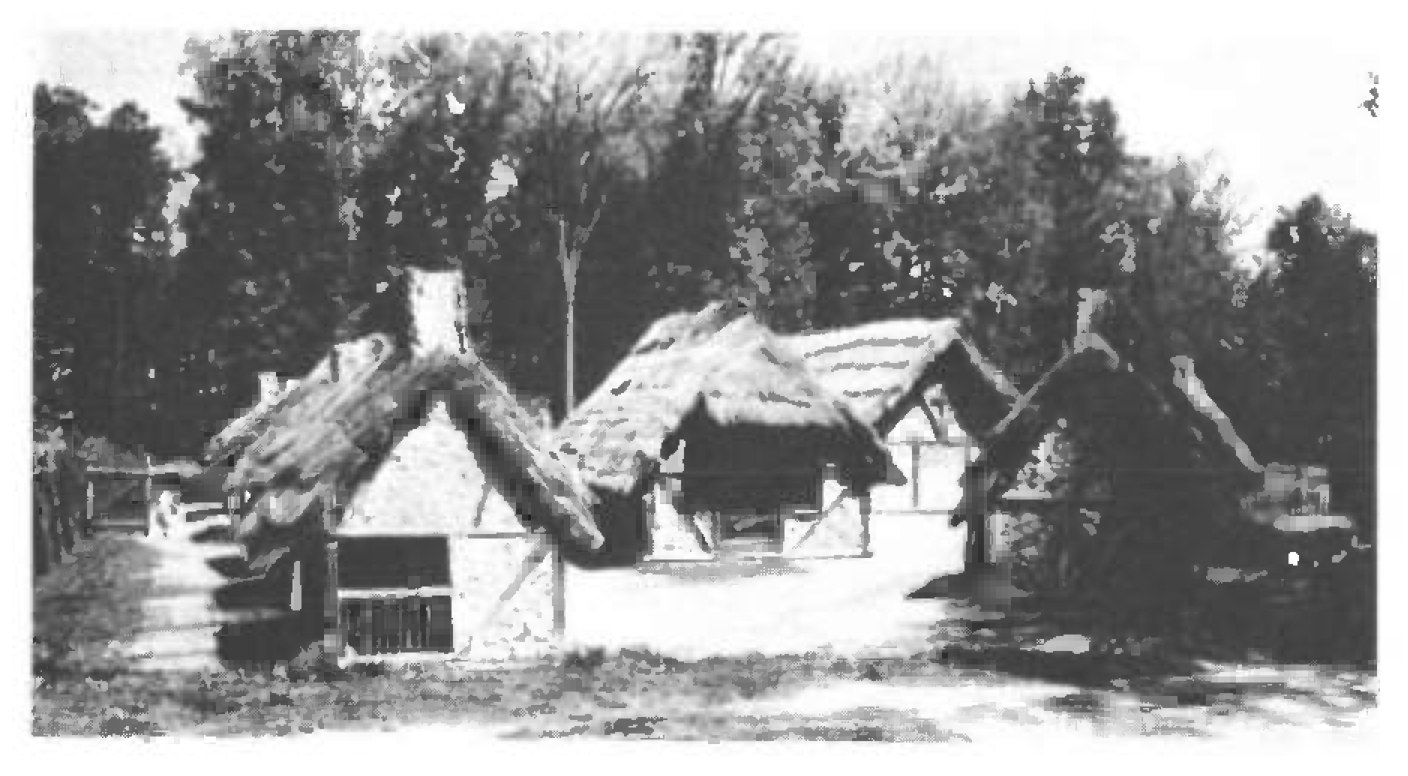
Jamestown was the first permanent English settlement in America, its settlers having arrived there on May 13, 1607 in three small ships, in all, 144 passengers. They landed on the following day, went ashore and set to work to build a fort.2 Thus, the first permanent English settlement was begun on the shores of the James River in Virginia about 20 years after Sir Walter Raleigh’s ill-fated attempts to establish a colony on Roanoke Island and 13 years before the Pilgrims made their historic landing at Plymouth Rock.
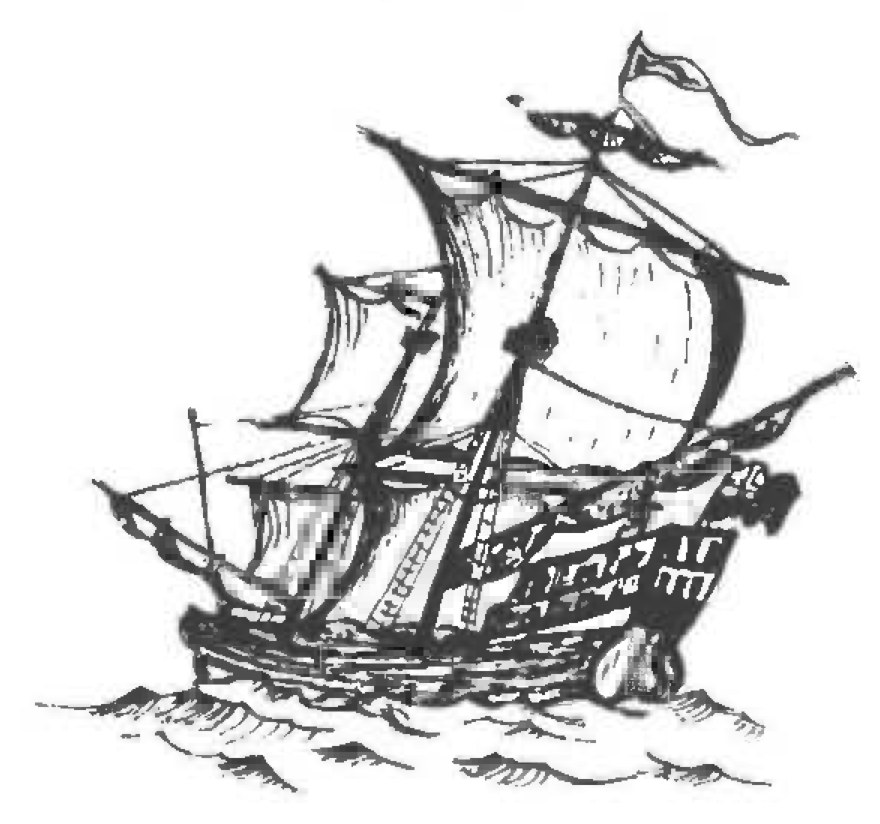
John Thomas left England in 1609 aboard the ship Sea Venture. He was one of nine men aboard whose fare had been paid by Sergeant William Sharpe.3 In addition to John Thomas, the others were: Richard Vase, Lewis Jones, Leon Laughton, Willi. Cooke, Peter Whadsey, Edward Jones, Jon. Ward and Wm. Wooley. The group had boarded the Sea Venture either at Wookwick, a port area on the outskirts of London where the ship began its journey, or they joined the immigrants at Plymouth, England. There is no documentary proof as to just which place John Thomas boarded the ship. In any event, the Sea Venture sailed from Plymouth, England, June 2, 1609, bound for Virginia. It was the flagship of a fleet of seven vessels and two pinnaces. Admiral of the Fleet was Captain Christopher Newport GENEALOGICAL DEPARTMENT CHURCH OF JESUS CHRIST OF LATTER-DAY SAINTS and aboard the Sea Venture were Sir Thomas Gates and Sir George Somers, the latter of whom had joined the Sea Venture during its stop at Plymouth.
The fleet of ships, called the Third Supply by the Virginia Company, sailed in what today would be called a convoy. On July 24, 1609, in the latitude of 27 degrees (no longitude given) about eight days out of Virginia, the fleet was engulfed in a terrific storm. Today storms of such proportions are called hurricanes, named for women, and they are patiently charted by man’s most modern methods. In 1609 however, there was no warning, thus, when the storm struck, the fleet of small ships was suddenly tossed and scattered about by the wind and waves. Passengers cringed in terror.
William Strachey, secretary-elect of the new Virginia colony, who later wrote a most compelling account of the journey, said: ” A dreadful storme and hideous began to blow from out of the north-east, which swelling, and roaring as it were by fits, some houres with more violence than others, at length did bete all light from heaven, which like an hell of darkenesse turned blacke upon us, so much the more fuller of horror. . .”4
Mr. Strachey, said to have been a friend of William Shakespeare, apparently sent a copy of his account back to England which the playwright must have read in time. Most students of Shakespeare agree that his play, “The Tempest,” is based upon the harrowing experiences of those aboard the Sea Venture, and much of the dialogue in the play parallels that contained in Mr. Strachey’s account.5
As the violent storm continued to toss the fleet about, those aboard the Sea Venture lost sight of the other ships. Soon it was only the Sea Venture against the elements. Timbers of the tiny vessel twisted and groaned. Numerous leaks sprung up in the hold and of the 150 people aboard, practically everyone set to work throwing overboard as much of their possessions as they could spare. Many of the settlers were taking with them all their worldly goods and deciding which of their belongings to throw overboard was not an easy task.
Strachey’s account continues: “. . .Waters like whole rivers did flood in the ayre (air). The glut of water was no sooner a little emptied and qualified, but instantly the winds (as having gotten their mouths now free, and at liberty) spake more loud and grew more tumultuous and malignant.”
Soon the ship began to lose its caulking between the plank joints and everyone who was able, took a candle and went below to look for leaks. Pumps were manned night and day, but they eventually became choked with bread and other items of food and personal property that had been scattered due to flooding of the ship. With 51 0189556 the pumps failing, bucket brigades were organized then the bailing was resumed by hand. Water continued to rise in the hold however, and in some areas it was waist deep, but the crews continued to fight to save the ship and their lives.
Three days later, after superhuman struggles to keep the ship afloat, Sir George Somers, who was standing watch on deck, spied land. The ship was headed directly into it, but as the sails and controls had been lost in the storm, all they could do was to stand helplessly by and let the vessel land where it would.
The rapidly dying wind swept the Sea Venture, its crew and passengers onward toward the shore. Accordingly to Strachey, the ship was jammed “. . .between two rockes, where she was fast lodged and locked.” The men, though bone tired from days and nights of struggle against the storm, hove to the “boate and skiffe” to take the women and children to the shore about three quarters of a mile away. They also were able to save most of their provisions, all the tackling of the ship and much of the iron.
After all had been landed safely ashore, those in charge of the ship began to take stock of their whereabouts. It was discovered that they had landed on the Isles of Bermuda, commonly called the Devils Islands. These islands had been avoided for many years by sailors because of the many superstitutions about them.
With these superstitions in mind, the crew and passengers began a fearful exploration of the immediate area where they landed. They knew nothing of the remainder of the Third Supply fleet, and many hoped they would find some of those ships at least, possibly beached somewhere along the nearby coast. They found nothing however, but there was little time for them to mourn the loss of the other ships. Their own lives were now of first concern.
If there was a passenger list on the Sea Venture it can be presumed lost in the storm. Possibly such a list is in the records of the Virginia Company somewhere in England, but exploratory searches have not located one. Thus, names of only about half of those 150 people aboard the Sea Venture are known. Among them were: Sir Thomas Gates, Captain Christopher Newport, Admiral Sir George Somers; John Rolfe and wife (Mrs. Rolfe gave birth to a baby daughter on the island and named her Bermuda. It died there. John Rolfe later was to marry the Indian princess, Pocohontas); William Strachey, who wrote the only known eye-witness account of the storm; William Sharpe, who had paid the fare of John Thomas, and less than 50 others whose names are not known.6
Superstition or not, the party could not have purposely been marooned on a better island. Food was in abundance, both fish and fowl, and the climate was ideal. There were no human inhabitants. True to the pioneering spirit of the immigrants however, the one thought of those who were shipwrecked was to continue their journey to Virginia as soon as possible. With this thought uppermost in their minds, they set to work to build two boats which could be used to accommodate the entire party the remainder of the way. Construction of the two vessels was begun. Remains of the Sea Venture and timbers hewed from sturdy cedar trees that grew in profusion on the islands, were used as building materials. The work however, was frequently brought to standstill in order to settle petty differences among the immigrants. By the end of their stay on Bermuda, one man had committed murder; four, including the infant daughter of the John Rolfes, had died from other causes; there was one marriage; one man had deserted and was left behind; eight men were lost at sea in a small boat en route to Virginia for help, and one was added to the party — a baby boy born to Mr. and Mrs. Edward Eason,7 descendants of whom over 100 years later would settle in the same Cashie River area of Bertie County, North Carolina, as would the descendants of John Thomas.
By April 1610, the two small boats, called pinnaces, were completed. The larger one was 40 feet long with a 19 foot beam and a rake of 14 feet. She weighed as best as could be estimated, about 80 tons. It was named Deliverance. The other boat was 29 feet long and 15 1/2 feet at the beam, weighed about 30 tons and drew six feet of water. It was called Patience. Material—beams, timbers and other vital parts — from the Sea Venture served the purpose well. However, most of the Sea Venture was intact and it still remained jammed between the two rocks where it had been driven by the hurricane.
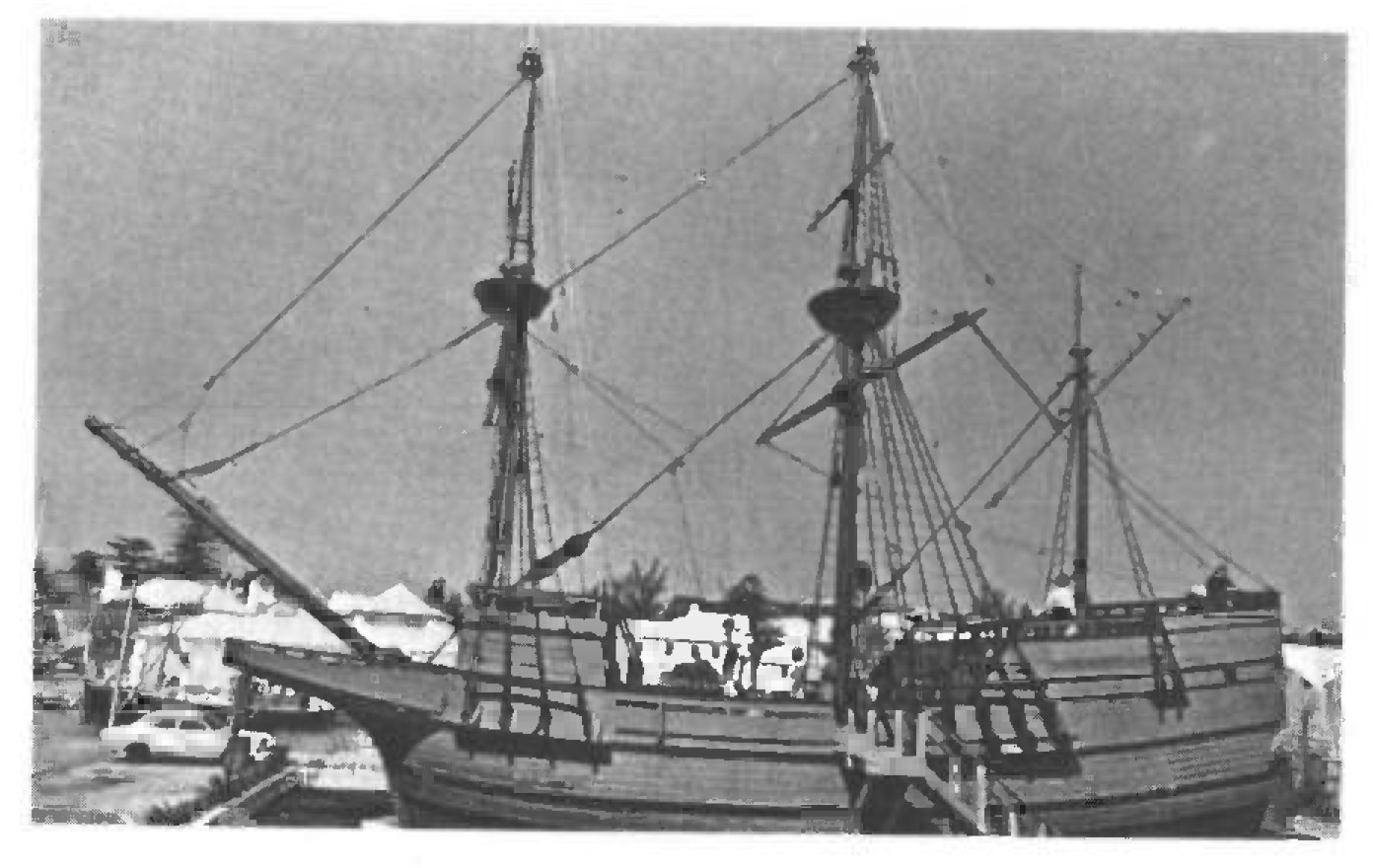
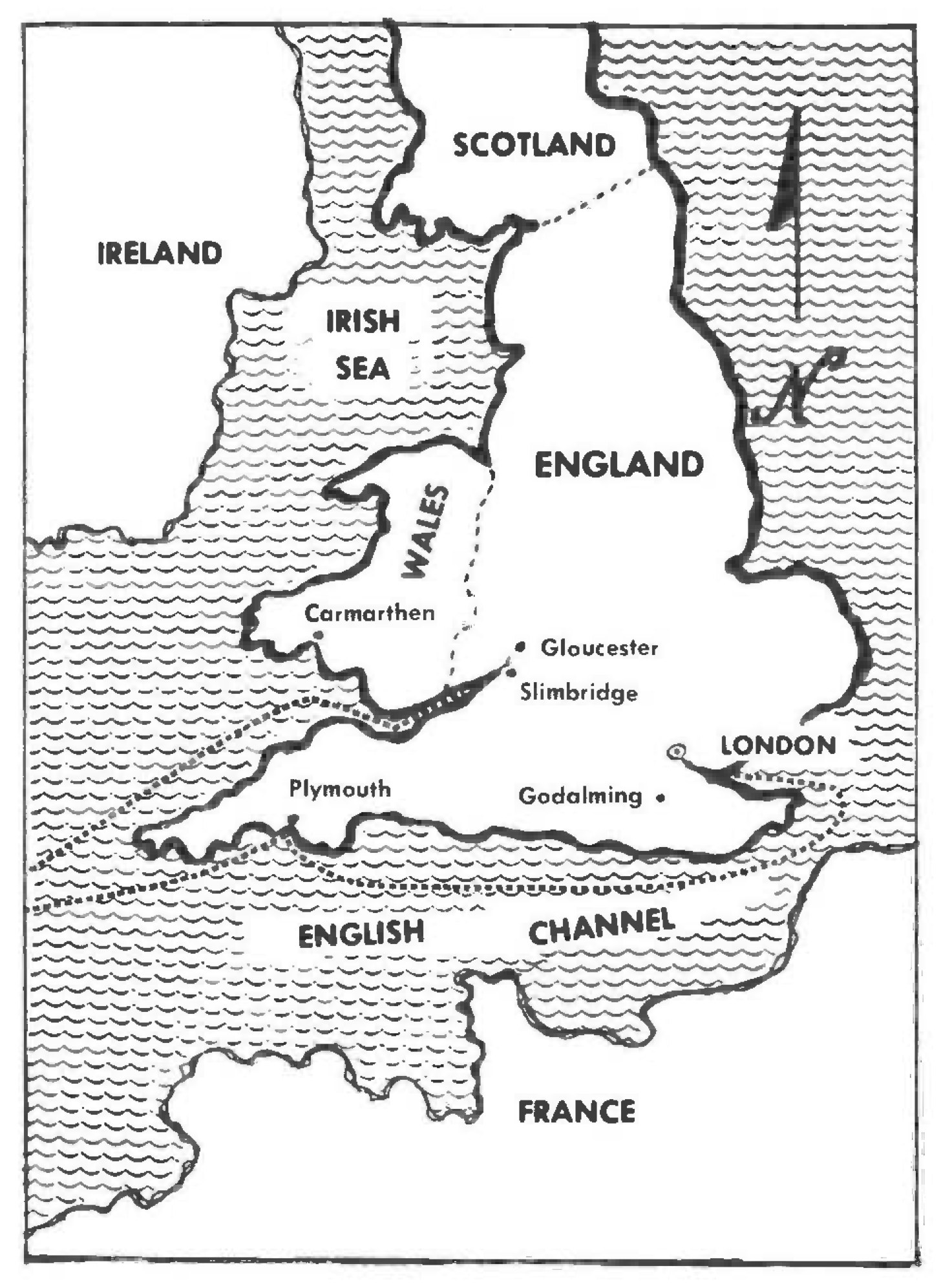
By May 1610 everything was in readiness for the continuation of the journey to Virginia. Quoting again from William Strachey’s account: “…We sailed on May 10 (1610) for Virginia. The Deliverance struck (a reef) going out, but mercifully was not damaged. On the 20th at midnight we had a marvellous sweet smell from the shore which did a little glad us. We were near Cape Henry (Virginia). We reached Jamestown on the 24th. . .”
Scarcely had they dropped anchor and landed when most of those aboard began to wish they were back on Bermuda. The settlers at Jamestown had just experienced what they called the “Starving Time.” A population of some 500 people had shrunk to about 60 due to disease, sickness, Indian raids and malnutrition. It had destroyed morale and reduced the population to little more than selfish scavengers who stalked the area in search of any kind of food.
Upon arrival too, those who had been aboard the Sea Venture discovered that all but one small ship of their original fleet of nine, except of course, their own, had arrived safely after the storm, and had long since returned to England.
After distributing what little provisions they had, Sir Thomas Gates felt that it was useless to attempt to remain at Jamestown. He packed everyone aboard the remaining ships and on June 7, 1610, left the stricken city and started down the James River toward the ocean with the thought of heading for an English settlement on Newfoundland. En route down the river the group met Lord De la Warr and a fleet of ships bringing supplies along with 150 new settlers. Jamestown was saved.
John Thomas and the eight others whose fare had been paid by William Sharpe, apparently remained with Mr. Sharpe for a time to help him stake out his claim for land. This amounted to 50 acres for each of the headrights of those whose passage Sharpe had paid, a total of 450 acres plus 50 acres for himself — 500 acres in all. These headrights were used a number of times later, including at least twice by William Sharpe’s widow, Elizabeth, who later married a Packer (Parker), to patent land in Henrico County, Virginia in 1636.8 and again in 1673.
There are several references to John Thomas in various land patents but I have not found a land patent issued directly to him earlier than 1649. Such records could well have been lost as one patent issued October 23, 1637 mentions property “upon the Baye S. into the woods & W. upon land of John Thomas.” In view of this, apparently John Thomas was living on his own land at that time. In February 1638 he was living near Henry Marshall on the York River, apparently on adjoining property. Later records indicate that John’s grandson married a granddaughter of Henry Marshall.
“Old Albemarle,” by Worth S. Ray, page 623.↩︎
“Jamestown, Virginia, The Townsite and Its Story,” by Charles E. Hatch, Jr., National Park Service, 1957; page 13.↩︎
“Abstracts of Virginia Land Patents and Grants, 1623-1666,” by Nell Marian Nugent, page 45.↩︎
“A Voyage to Virginia in 1609,” edited by Louis B. Wright, page 8.↩︎
Ibid, Intro, ix.↩︎
Bermuda Historical Quarterly, Hamilton Bermuda, “Cast Away on Bermuda,” by W. E. S. Zull, Summer 1959 issue, pages 49-67.↩︎
Ibid, Summer 1963 issue, page 56.↩︎
Nugent, pages 45, 65.
NOTE — Other accounts of the Sea Venture: “Memories of the Discovery and Early Settlement of the Bermudas or Somers Islands, 1515-1685,” by Major General J. H. Lefroy, 1877. “The Adventurers of Bermuda,” by Henry Wilkinson, Oxford University Press, London, 1933. “Sea Venture,” fictionalized version, by Willoughby Patton, Longman’s Green & Co., N. Y. 1959.
N O T E 2 — In response to an Inquiry in February 1969 to the Smithsonian Institution, Washington, D. C., pertaining to the finding of the wreck of the Sea Venture, M. L. Peterson, chairman, Department of Armed Forces History, wrote: “.. .(Wreck of) the Sea Venture was discovered by a young American in Bermuda in 1958. I have dived on the wreck and I am convinced the identification is correct. The Bermuda government has not yet made plans to salvage the ship and preserve it but the site has been declared off limits to divers and is protected.”↩︎