← The Thomas and Bridges Story, 1540–1840
Chapter IV: First school on Donaldson Creek
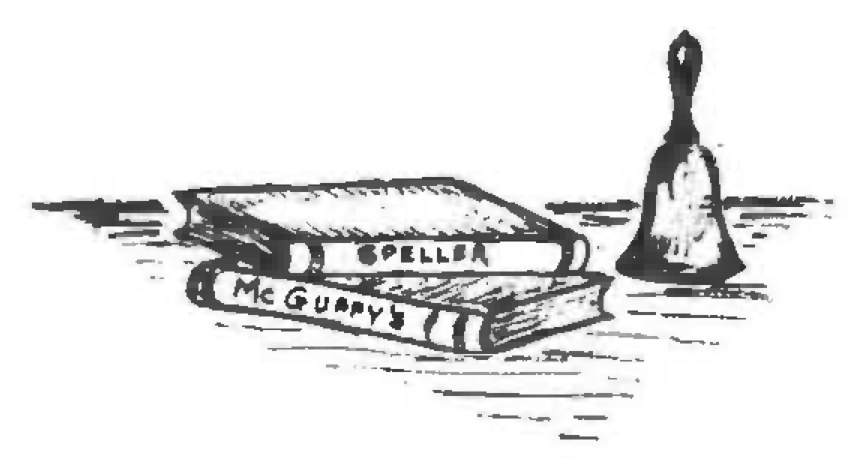
The early schools of Trigg County, like those scattered throughout Kentucky in the early 1800’s were quite primitive. The buildings usually were small log structures with either dirt or hand-hewn board floors. Furnishings were sparse and uncomfortable; textbooks were few. In those days even the teachers were ill prepared to teach scarcely more than the bare minimum.
By 1884 there were 56 public school houses in Trigg County all but 18 of which were built of logs. Books were improving however in this day of the so-called “blue back” speller and McGuffy’s Readers. During the 1882-84 school year a total of 3,543 white and 1,395 Negro children attended the public schools and the county employed 63 teachers who made a combined salary of $7,500 — an average of $120 per year.1
Schools of Kentucky got off to a wavering start. The Legislature passed an Act February 10, 1798 that set apart some 6,000 acres of public lands for the support and benefit of five seminaries scattered throughout the state. Part of this land extended into the “Lands South of the Green River,” that had been set aside for the benefit of veterans of the Revolutionary Army. In fact, some of this land bordered that which was acquired by Peyton Thomas in 1860. Similar Acts in 1805 and 1808 extended use of such lands for these educational institutions; none was in Trigg County however.
James Thomas II had been educated in the schools of Bertie County, North Carolina. Examples of handwriting still in existence indicate that not only James but others in the Thomas family of North Carolina were quite literate. However, school facilities in the Donaldson Creek valley were non existent for several years after the community had been settled.
There were several teachers in the Canton Precinct of Trigg County, of which Donaldson Creek was a part. These included Christopher Pritchard, Wilson Wallis and David Barton. However, these men apparently were in the precinct after 1820 when Trigg became a county. There is record however that Christopher Pritchard may have been in the community earlier. A notation in the Perry Thomas “Cipher Book,” still in existence, states: “Perry Thomas, his book. From this place I was taught unknowing, by Christopher Pritchard of North Carolina, Bertie County.”2 Apparently Perry was being modest indicating that Schoolmaster Pritchard hadn’t the slightest idea that he had been able to teach Perry anything.
Pritchard and other teachers however, did a rather good job. A look at Perry’s “Cipher Book” indicates that by 1818 he had advanced into many of the intricacies of mathematics including square and cube root.
Efforts to organize a school in the Donaldson Creek community were first exerted in 1813 according to an account found among the Perry Thomas papers.
It reads:
“Kentucky State, Christian County, articles of a school provided between Ephriam Cowand as teacher on the one part, and the gentlemen that are his employers on the other part witnesseth etc: That I the said Cowand will teach school twelve months five days in a week and make good all loss time except such disagreeable weather that is not suitable for his pupils to go or be at school in storms etc. (In Reading, Writing & Arithmetic) For these two stated payments viz fore barrels of corn i.e. twenty bushels of good sound merchant corn payed by the 15th of November next and two dollars paid the 1st day of May 1814. The above corn to be delivered at my dwelling house. The afore-said payments to be paid for every scholar that is entered or subscribed to the said school. Further I the said Cowand do bind myself to give due attendance at school such as shall be thought lawful and to try to learn and instruct all children put under my care to the advancement of children and benefit my employers do witness my hand and seal this day of April 1813.
“To all men by these presents that we the underneath written subscribed promise to pay Ephriam Cowand school teacher four barrels of corn and two dollars in cash after the above directions and do in proportion for any length of time and the number of schollars that we enter or subscribe to said Cowand’s school witness our hands and seals this day of April 1813.”
This apparently was copied from the original agreement as no signatures or day of the month had been affixed. One can well imagine who those signers were by checking a list of the community’s early settlers, and likely the names of James Thomas and Drury Bridges were at the head of the list. As most families who first settled in the valley had large groups of offspring, the first classes were probably well attended.
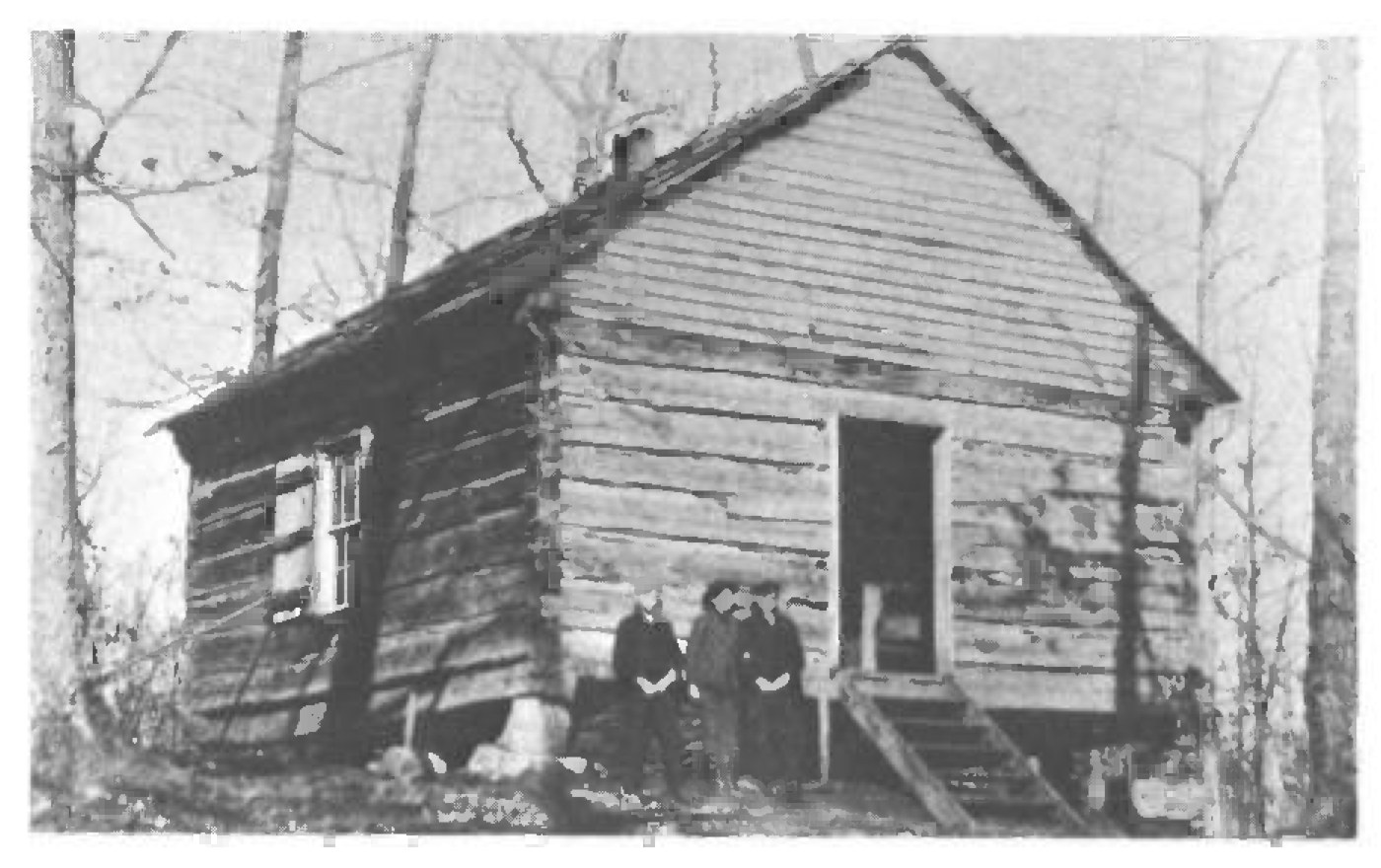
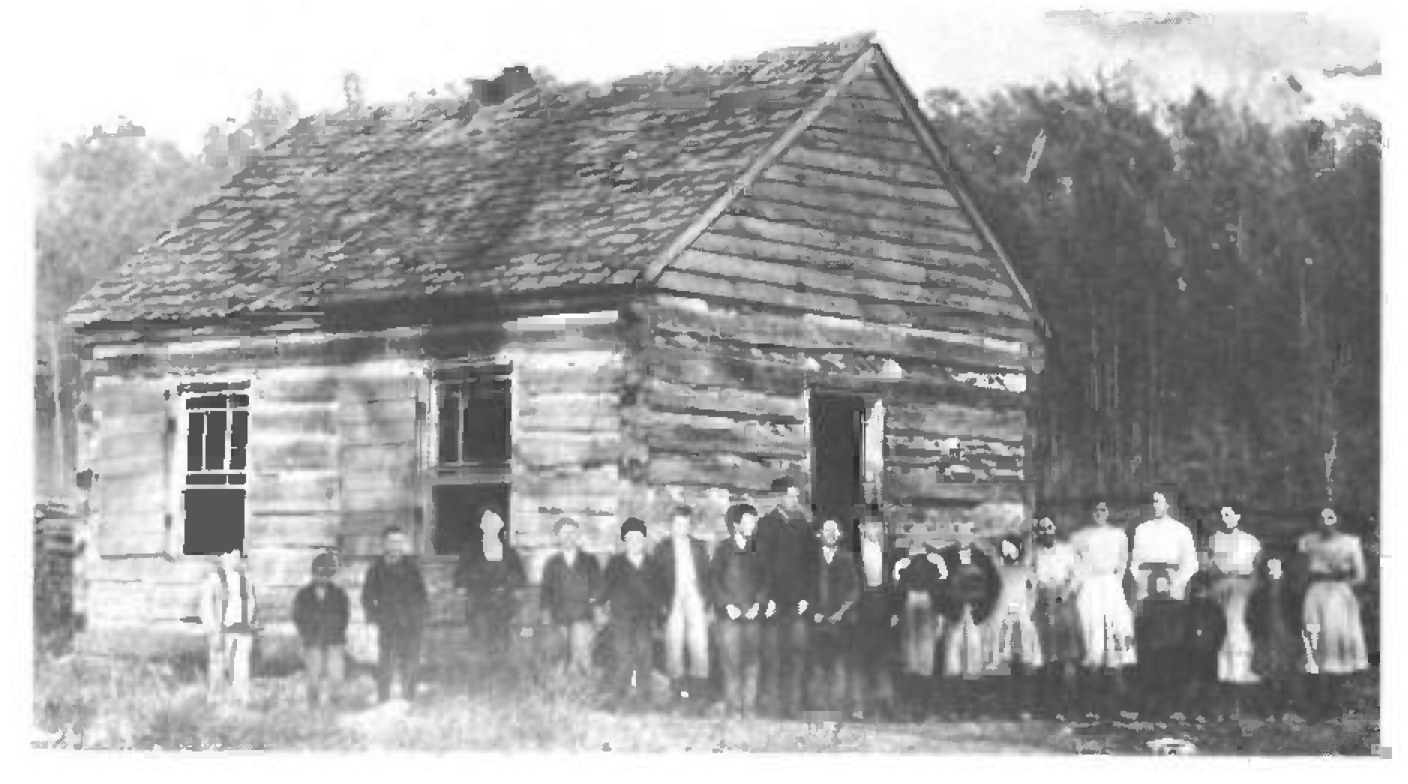
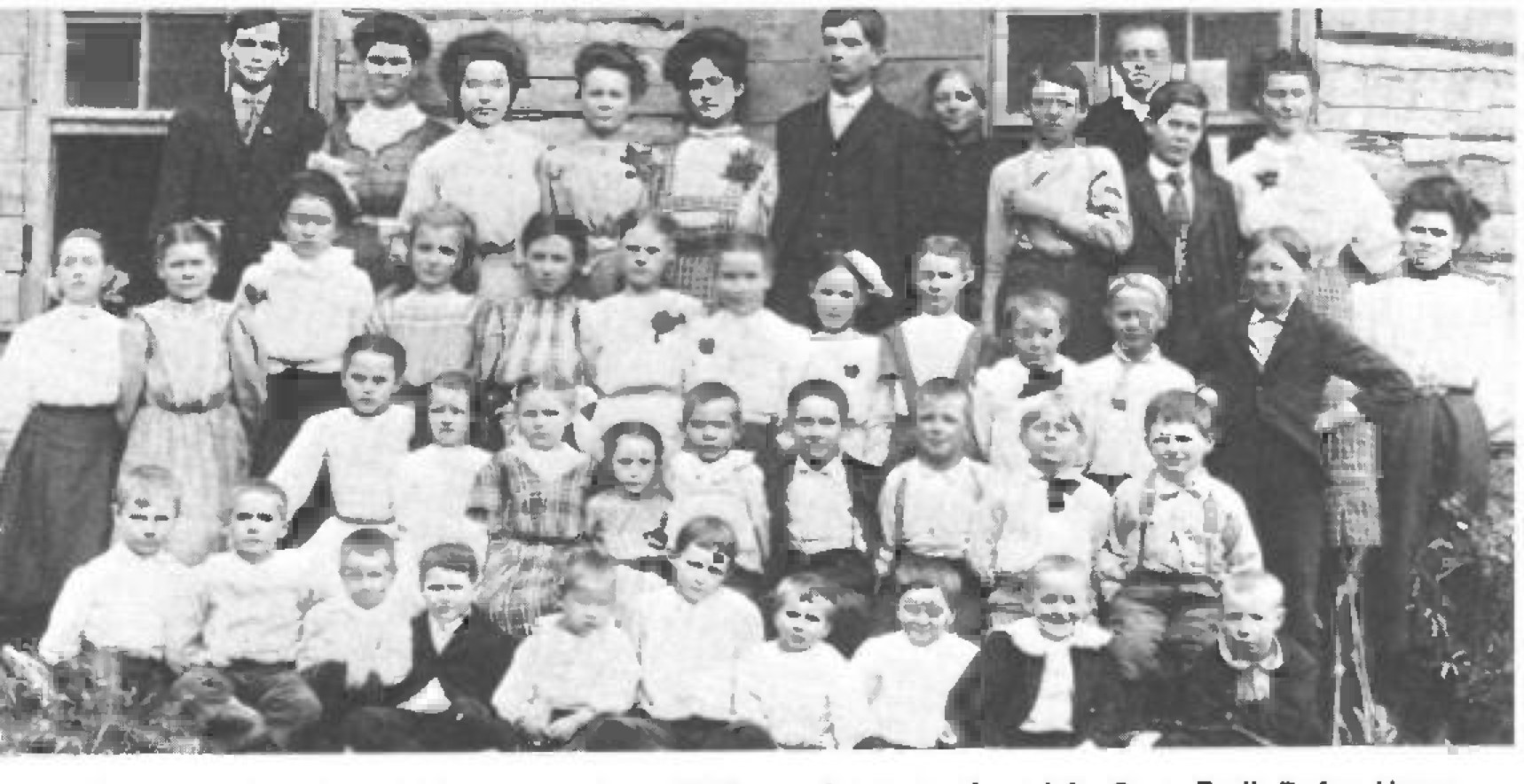
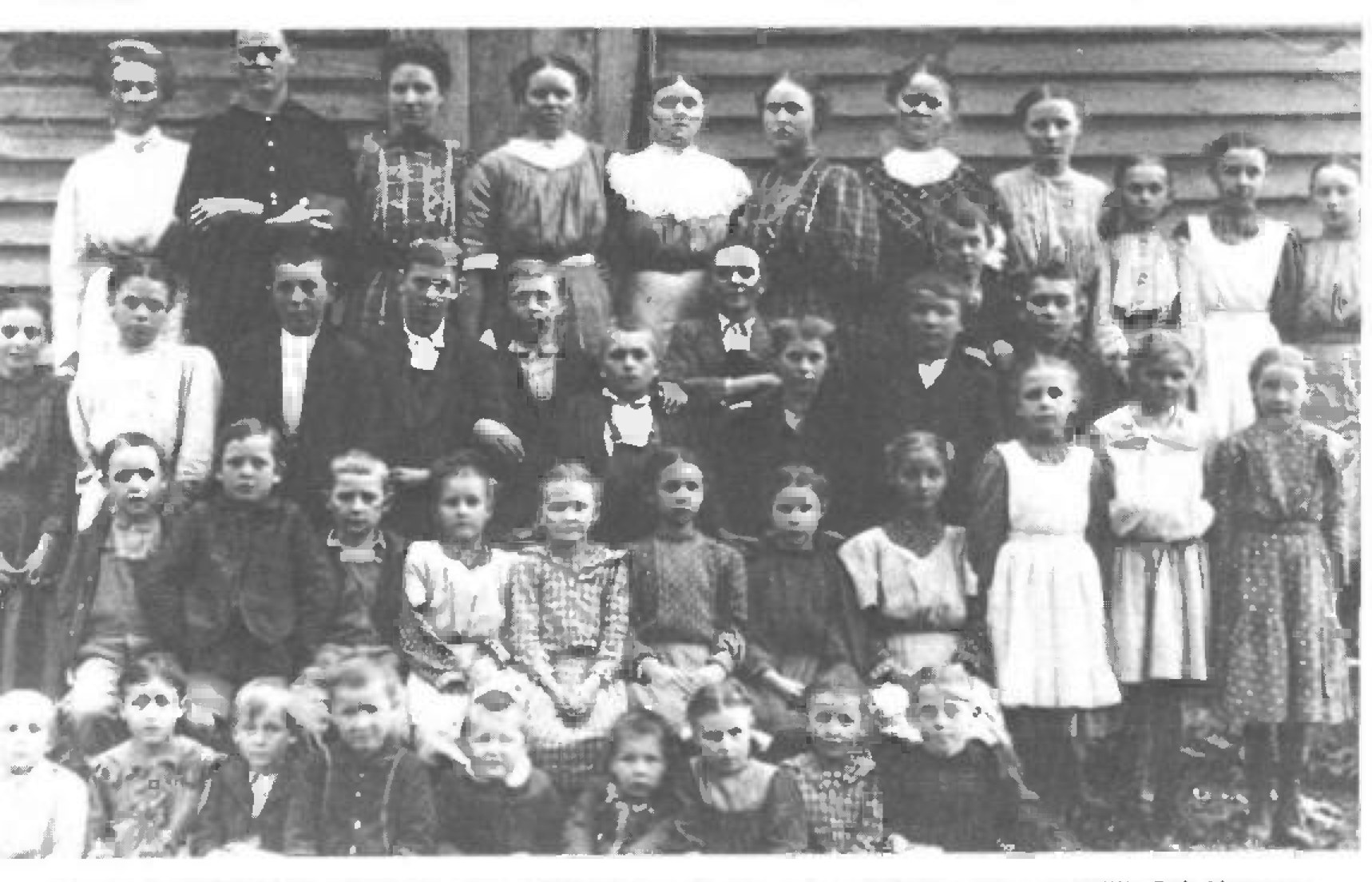
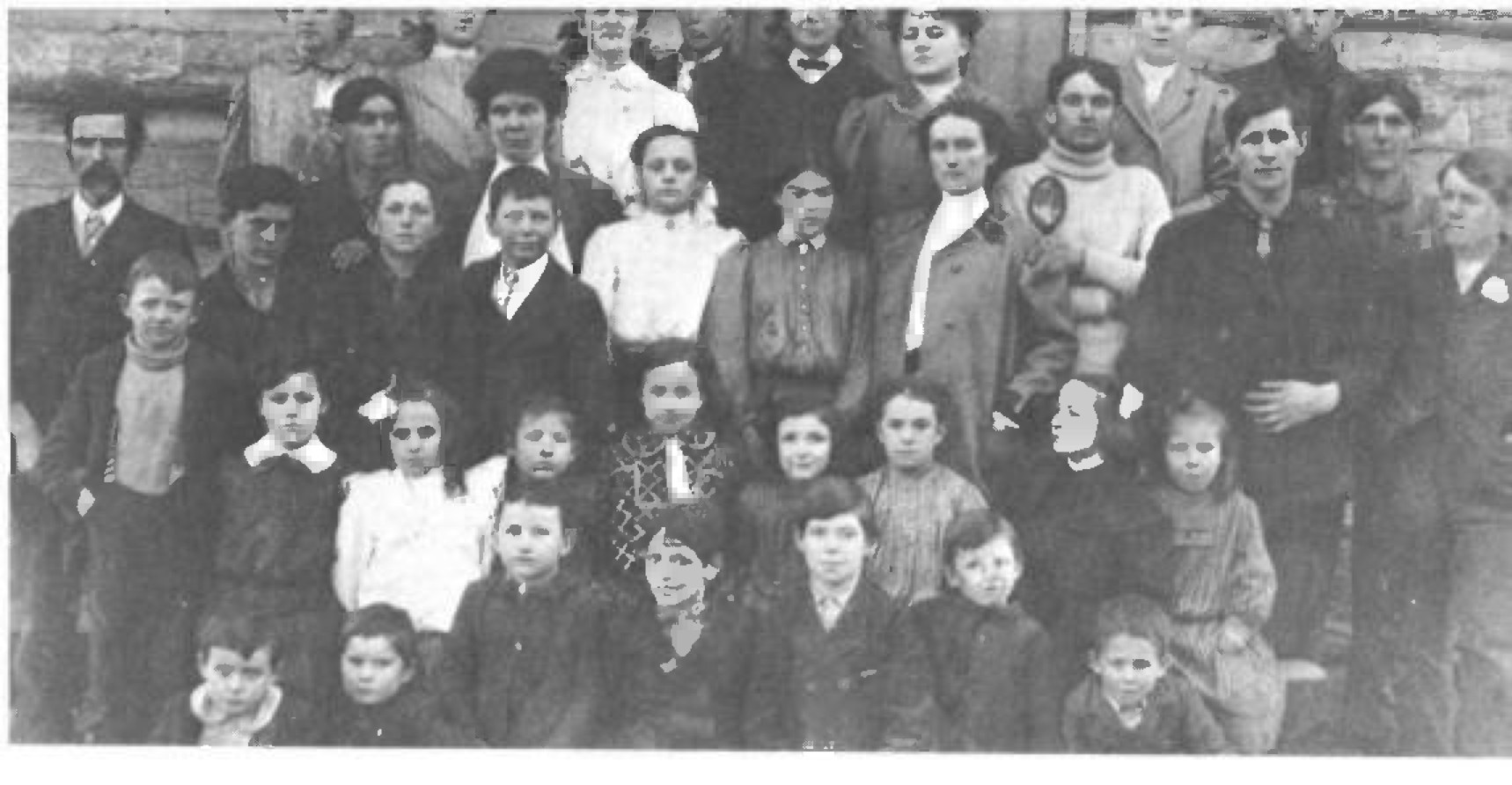
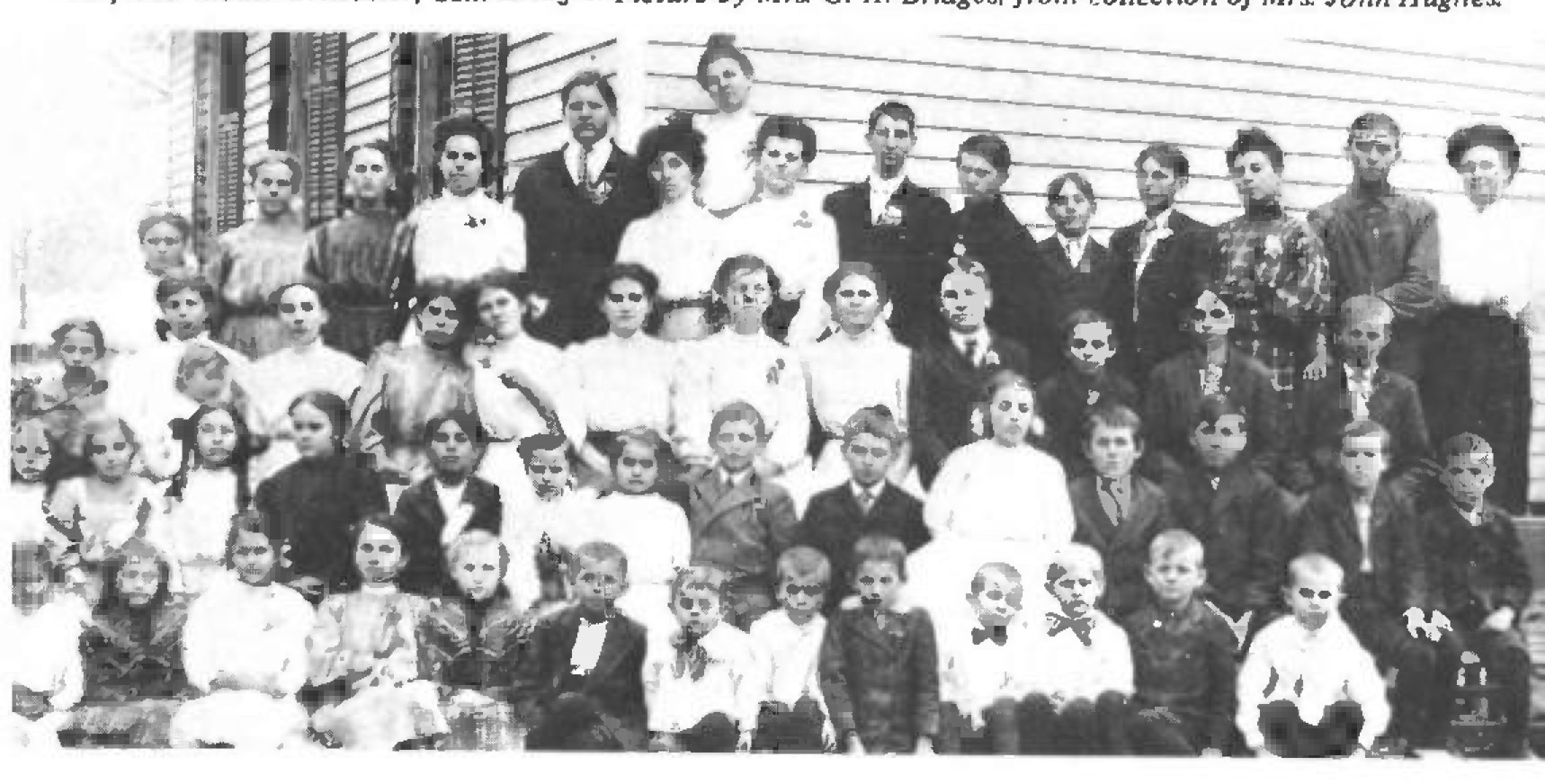
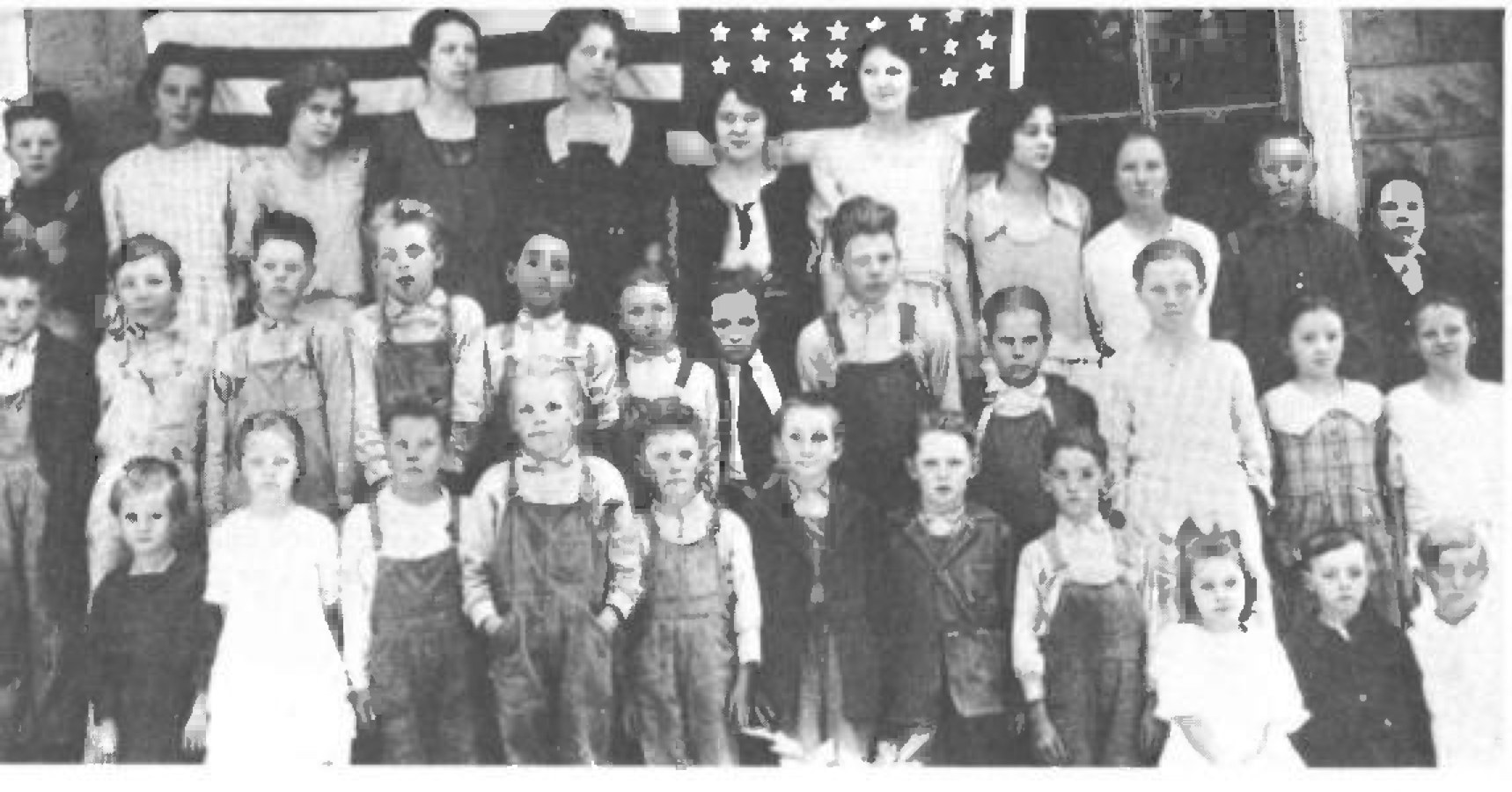
The first school sessions were held in the newly constructed Donaldson Creek church building.3 Presumably the teacher was Ephriam Cowand.4 No record has been found as to when the first school building was erected. However, it was a log structure similar to the church, except smaller, and may have been the log building known as the Upper Donaldson School that stood until the mid-1920’s in the corner of a field about a half-mile west of the original James Thomas homesite. Descendants of James Thomas and of other early settlers in the valley attended classes in that building until 1910. The following year, a concrete block school building was erected in a grove of trees on a gentle rise about a hundred yards east of the old log building near the Peyton Thomas cemetery. It was completed March 10, 1911. Another one room log building, and a later one of frame construction, called Lower Donaldson School, stood near the point where the Canton-Linton Road crossed Donaldson Creek about three miles west of the original James Thomas homesite. Other school houses were built near Beechy Fork Creek at Maple Grove, and near Oak Grove church to provide classroom space for children in those areas. These schools served the education needs of the communities until the 1930’s when all schools throughout Trigg County were consolidated.
Proof that Mr. Cowand’s school did not meet with a complete and whole hearted response from all of the community, however, is evident from this note in the Perry Thomas papers:
“Mr. Cohoon,5 Sir: We have made one more appointment to try to finish the school house, and as it is unjust for one part of the subscribers to do all and the others none, we therefore hope you will attend in the morning as it is high time it was done. The weather is getting cold and I never was used to teach in cold weather without chance of fire etc. From your sincere friend and with all best wishes. Levi Lancaster,6 11th October 1814.”
From this note it can be assumed that the first school building was under construction in the fall of 1814. Likely it was not completed until the spring of 1815. In any event, it was the first organized school in the Donaldson Creek community. The note indicates too, that apparently Levi Lancaster was probably the second teacher in the newly organized Donaldson School. Later, Ezekiel Thomas, Jr., taught classes in this school as did a Mr. Gray, first name of whom is not on record.
Perrin, pages 54, 55.↩︎
Perry Thomas “Cipher Book,” from collection of Allison W. Thomas.↩︎
Bridges History, 1928, page 9.↩︎
Ephriam Cowand (Cowan) was the son of Mary Cowand. He married Penny Stallins, January 8, 1815, in Christian County. His mother was one of the charter members of the Donaldson Creek church when it was formed in 1814. She was listed in the 1820 census of Trigg County with one daughter, l i k e l y the Nancy Cowand who married Christopher Miller, August 23, 1823, in Trigg County.↩︎
The “Mr. Cohoon” to whom the note was addressed probably was one of the sons of Joel Cohoon.↩︎
Levi Lancaster, born 1774, died Jan. 21, 1844, and Faithy Futrell (born 1780) daughter of Thomas and Sarah (Bittle) Futrell, were married Oct. 3, 1799, in North Carolina. He was the son of Samuel and Faithy Louise Lancaster. He and his family migrated to Kentucky from Northampton County, North Carolina, sometime after May 1, 1813. They had nine children: 1. Elizabeth, born July 8, 1800, died Oct. 25, 1806; 2. Wiley, born Nov. 11, 1803, married Nancy Craig, Oct. 24, 1824; 3. Edmond, born Nov. 22, 1806, married Elizabeth (Outland,) May 15, 1 8 2 8 ; 4. Lucretia born Aug. 1809, died Feb. 23, 1816; 5. Sallie Ricks, born May 1, 1813 (last of family to be born in North Carolina) married Jonathan Rogers, Dec. 11, 1823; 6. William Dorsey, born July 15, 1815, married Mary (Polly) Ann Colson, Oct. 16, 1 8 3 6 ; 7. Polly, born March 4. 1818. married Benjamin Rogers, May 31, 1839; 8. B a t h s h e b a , born Nov. 1, 1820, married Andrew I. Carr, Feb. 21, 1837; 9. Joseph Barnes, born Oct. 26, 1823, died July 26, 1824. — From family bible copy, furnished by Mrs Eugene Sumner, Route No. 3, Cadiz, Ky.↩︎