← The Thomas and Bridges Story, 1540–1840
Chapter XV: Joseph Bridger of England
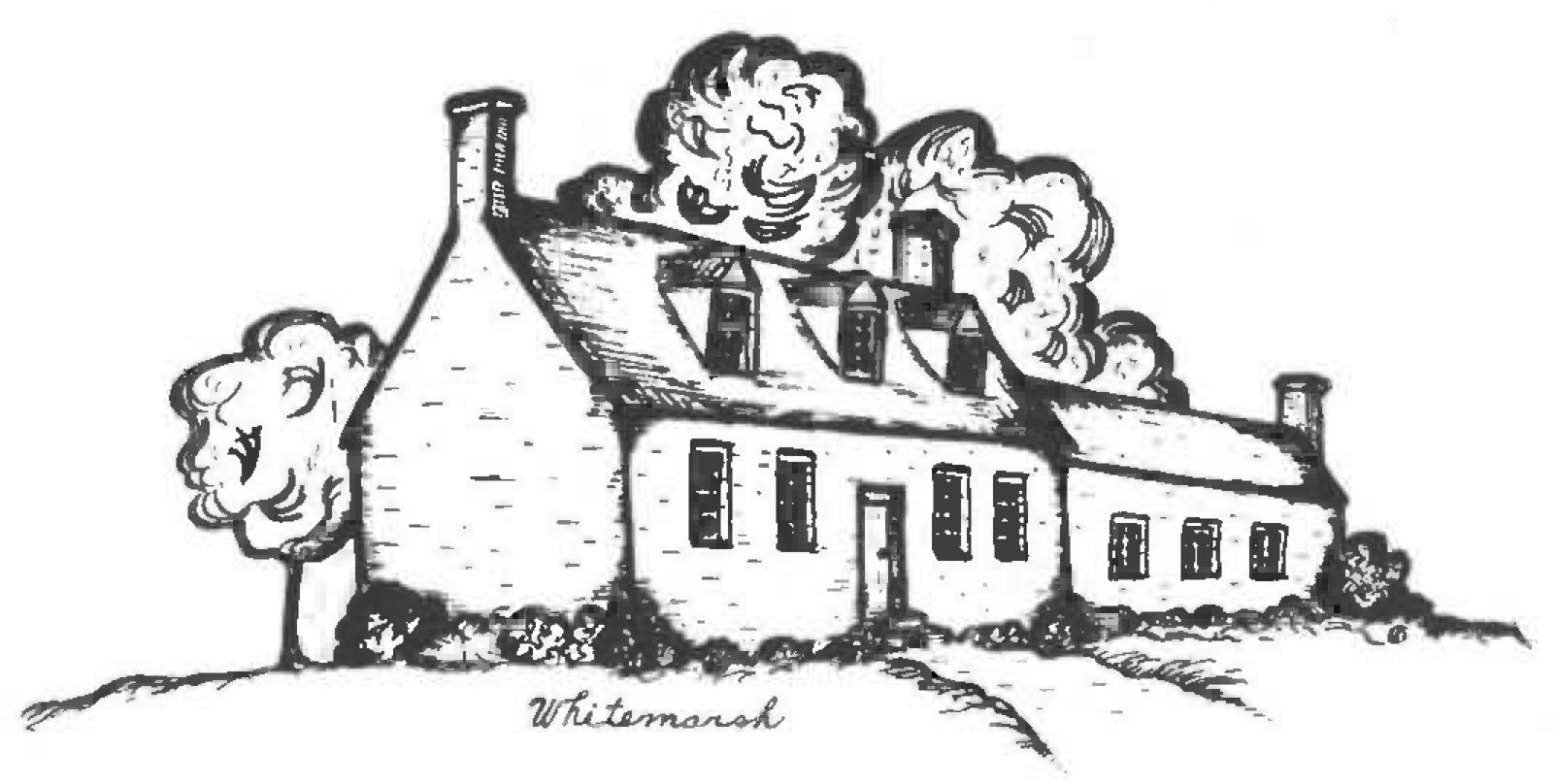
The American ancestral line of the Bridges family of Trigg County, Kentucky, dates back to the early 1650’s, when Joseph Bridger of Gloucester, England, arrived in Virginia.1
Joseph Bridger was one among a group of Royalists who remained loyal to the King of England despite the Civil War being waged there under the guidance of Oliver Cromwell. Thus, by 1653 when Cromwell became Lord Protector, many of the Royalists fled to Virginia, Joseph Bridger among them.
Actually the exact date of Joseph’s arrival in Virginia is not known, but if 1653 was the year, he was 25 years old at the time. In any event, his name first appeared in the official records of Virginia in 1657 when he was listed as a member of the House of Burgesses. He also served as a member of that body the following year and again in 1663.2
Joseph Bridger was a man of many talents and abilities. With the help of his father-in-law, Colonel Robert Pitt, and a man named William Burgh, he set out to obtain land in the new world, ultimately acquiring several thousand acres of valuable real estate in Isle of Wight County. The first land transaction in which Joseph was involved was recorded on March 21, 1664 when he, with the two other men mentioned, patented 3,000 acres of land located on a branch of the Blackwater River. Joseph’s portion was claimed through his having transported 24 persons to the colony, among them, William Thomas, an early-day member of a branch of the Thomas family. Two years later, June 7, 1666, Joseph Bridger, then called Captain Bridger, and William Burgh, patented 7,800 acres of land in Isle of Wight County “. . .beginning by a White Marsh, a meadow about halfe a mile from the main run of the Blackwater. . .” for transportation of 156 persons. The list of headrights included: William Thomas (likely the same one used in his first patent); Edward Thomas, Thomas Pitt, Joseph’s brother-in-law; James Bridger, his brother, and Joseph himself.3
The Blackwater River is a stream that originates near Petersburg in Prince George County, Virginia. It runs generally southeast to south and in many places it is the dividing line between Surry and Sussex counties; Southampton, Isle of Wight and Nansemond counties. It runs some 45 or 50 miles through the productive lowlands of Virginia’s Tidewater country to a confluence with the Nottaway River at the state line. At that point a combination of the two streams forms the Chowan River that runs south across North Carolina and widens into Albemarle Sound.
The land along the Blackwater was dark and fertile, ideal for the growing of tobacco, and Joseph Bridger built his plantation house on an 850 acre site which he had bought from Captain Upton, using bricks made by hand and baked on the place. He eventually acquired additional land — in all, over 12,000 acres — and soon put it to work raising tobacco and cattle. In due time Joseph Bridger was shipping his products to England by the ship load.
Successful in business and in the political life, Joseph Bridger rapidly rose to prominence in Isle of Wight County and the Virginia colony. He was called on in 1664 to serve as a member of the Commission appointed to adjust the boundary line between the states of Virginia and Maryland. Two years later, he was named adjutant general of the Virginia forces while also serving as a member of the general assembly. That same year he was one of the commissioners representing Virginia who conferred with a similar group from Maryland and North Carolina relative to the tobacco interests of planters in those states. As one of Virginia’s leading tobacco growers, he had a keen interest in this conference.
Joseph Bridger married Hester Pitt, daughter of Col. Pitt, his original land patenting partner prior to coming to Virginia. The Pitt family had also lived in Gloucester, England, near where the Bridger family lived, and there is evidence of intermarriage of the two families in England. Joseph and Hester (Pitt) Bridger settled in the big plantation house in Isle of Wight County and raised their family, four girls and three boys.
Despite this domestic setting however, Joseph took time out when the Indian War broke in 1675 to assume command of the militia from Isle of Wight County, all the while still serving on the council.4
The year 1676 was a significant one as far as the Bridger family was concerned, for it marked the beginning of a rift between Joseph Bridger and his oldest son, Joseph Jr., that eventually was to alienate them completely.
The difficulty began with what is known as Bacon’s Rebellion. Led by 29-year-old Nathaniel Bacon, a Virginia colonial politician and soldier, the Rebellion centered around the economic exploitation of the small farmers who lived in outlying districts scattered along an unprotected frontier far back from the shores of the James River. Despite these vicious and bloody attacks, during which time many settlers were wiped out, Governor William Berkeley had refused assistance, being willing, he was charged, that the border population should suffer while he and his adherents enjoyed a very profitable fur trade with the same Indians.
Nathaniel Bacon, though from a wealthy family himself, took up the cause of the farmers, commanded two unauthorized but successful expeditions against the Indians, one of them at Roanoke Island in North Carolina. After those encounters, Bacon went to Jamestown in June 1676 as the representative of Henrico, his home county, in the newly elected House of Burgesses which the governor had been forced to convene. Bacon brought many supporters to the capital, among them Joseph Bridger, Jr., and forced Berkeley into passing laws that would benefit the small land owners, and at the same time granting him a commission to continue his Indian campaigns.
The governor, seeing that he was going to have to face a battle with Bacon, fled to his home, “Green Springs,” located on the eastern shore of the James River some two or three miles from what today is the city of Williamsburg. Fleeing with the governor was Joseph Bridger, Sr., denounced by Bacon along with the governor and many other prominent Virginians. However, before he left, Joseph is reported to have buried a goodly portion of his money at White Marsh to prevent it from falling into the hands of Bacon while he was gone. It probably was a wise move for during Joseph’s absence, his plantation was plundered and his cattle and other property taken.
Bacon and Berkeley clashed a second time, with the governor coming out second best again, so he fled once more to Green Spring. Bacon, angered, set fire to Jamestown, burning the public buildings and all the valuable records of the activities of the colony up to that time. Unfortunately, Bacon was stricken, some say of malaria, others say of dysentery, and died October 1, 1676, before he could carry out the reforms he had promised the small farmers. Without a leader, the Rebellion collapsed. After a few months, Governor Berkeley returned, captured all of Bacon’s men he could find, and hanged a number of them before he was forced to return to England.
Sir John Berry, one of the commissioners sent to Virginia by Charles II to report on the progress of Governor Berkeley, had this to say about Joseph Bridger: “(He was) a very resolute gentleman, who though forced to flee in the heat of war in his own countrie, yet on his return, was very active and instrumental in reducing to their obedience the South parte of the James River.”
Joseph Bridger, in his allegience to King Charles II, remained at Green Spring with Governor Berkeley, and while there, witnessed the governor’s will. He also was a member of the governor’s court which condemned to death the leaders of Bacon’s Rebellion. It was through his influence, no doubt, that his son, Joseph Jr., was pardoned for the part he played in the Rebellion and was permitted to go free. Despite this apparent act of fatherly love however, Joseph Sr., never forgave his son and disinherited him in his will.
In 1680, reminescent of Nathaniel Bacon, Joseph Bridger, Sr., was commissioned Commander in chief of the militia and ordered to raise men to protect the frontier against the Indians in an area that included not only Isle of Wight County, but also Surry, Lower Norfolk and Upper Norfolk (later Nansemond) counties.5 His title was major general, and eventually, in his later years, he was known throughout the area as General Bridger. He continued his close association with the governor and became a dominant figure in Virginia politics during the last years of his life. One of his last official duties was in 1683 when he served as a member of the council of state and of the general court along with 10 other men, many of whose descendants in years to come would be prominent in charting the progress of the State of Virginia.
THE OLD BRICK CHURCH
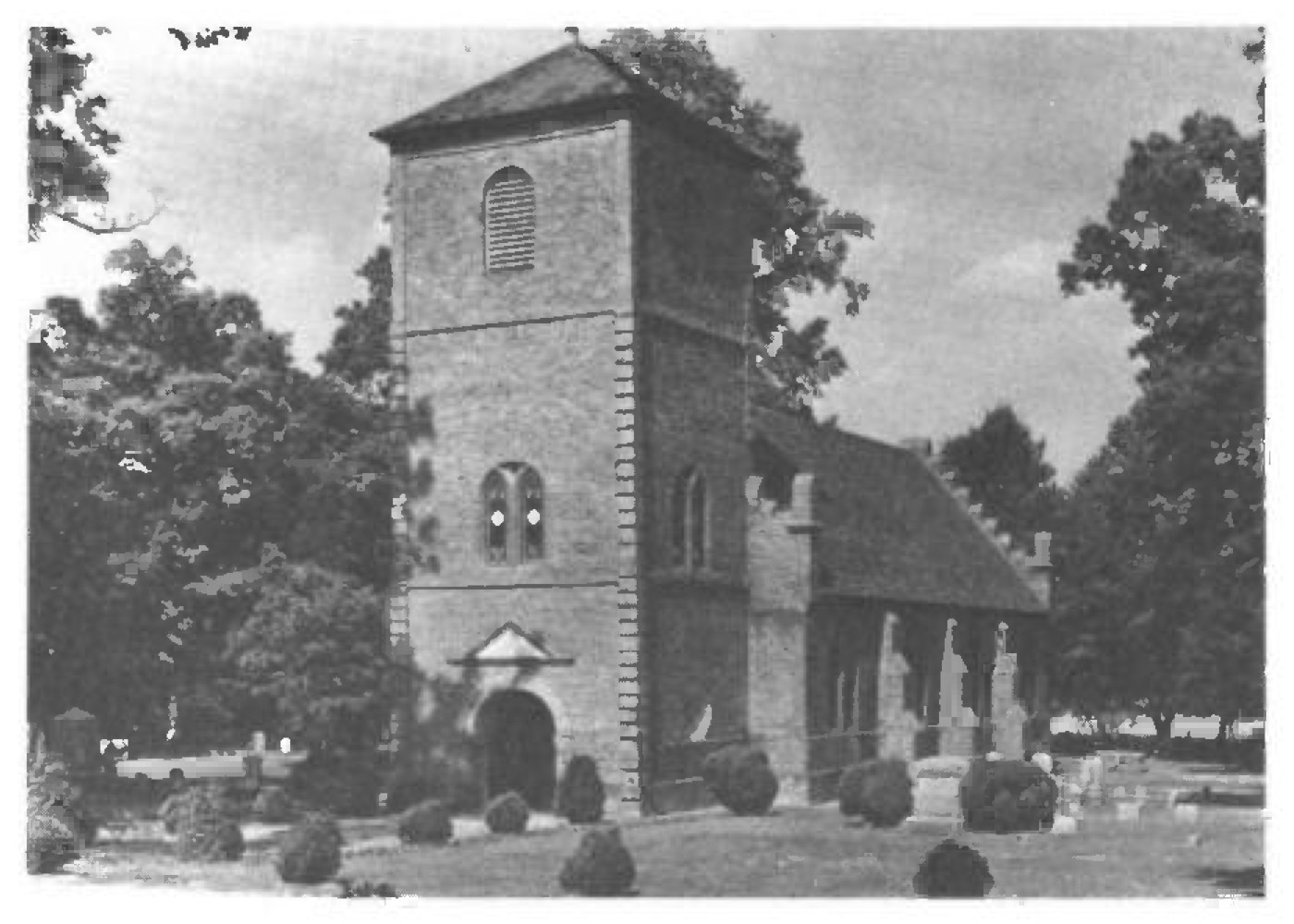
No account of the life and times of Joseph Bridger can be written without devoting some attention to the Old Brick Church in Isle of Wight County, near Smithfield, Virginia. Known as St.Luke’s, this structure today is said to be the oldest church in the nation.
The traditional builder was for many years believed to be Joseph Bridger’s father. According to Miss Elizabeth Jordan,6 secretary of Historic St. Luke’s Restoration, when Joseph Bridger came to Virginia in the 1650’s, he is said to have brought with him a letter from the Bishop of London directing him, when he arrived in Virginia, to look after the Brick Church of Corawoak (sometimes spelled Warrasquyoake and other ways). Miss Jordan said that many years ago, Mrs. Walter Dey of Norfolk, Virginia, told her and her sisters that her Grandfather Bridger showed her the letter when she was a child. Unfortunately the letter was burned when her grandfather’s house in Portsmouth, Virginia, was destroyed by fire.
As for the traditional builder being Joseph Bridger, father of Joseph of Virginia, this seems to be in error. John Smythe, who came to Virginia from England and settled in the Berkley Hundred, wrote a history of the Berkley Hundred of Gloucester, England. This account was published in three large volumes and in it he minutely described the life and times at Slimbridge and other areas of Gloucester. One of the families he wrote about was that of Lawrence Bridger, grandfather of Joseph of Virginia, who was rector at Slimbridge.
According to Smythe, the father of Joseph Bridger who came to Virginia was named Samuel Bridger. In the 1930’s this reference was used as a basis for a Bridger family sketch in the book “Seventeenth Century Isle of Wight County,” by John Bennett Boddie. However, in support of the tradition that the structure was built by one of the Bridger family, it is now believed by authorities of the Historic St. Luke’s Restoration, that Joseph Bridger, a half brother of Samuel, the father of Joseph of Virginia, was the architect of the building. Miss Jordan said this was a strong possibility but “. . .we have not been able to locate any documentary proof. We wrote the Rector of the church at Slimbridge in an attempt to get accurate information, but he wrote saying that Smythe’s book was not considered reliable there.”
As for proof of the date of construction of the building being 1632, one has to go back to 1887. That year a severe storm blew down a large tree which fell on the southeast corner of the old building and damaged many of the original bricks. When the rubble had been cleared three bricks were found with the date 1632 pressed into them. Two of those bricks were broken, but the third one, sound as the day it was made, was put back into the restored wall and it can be seen today under the east window behind the altar.
Despite the rent in the curtain of family tradition that Joseph Bridger’s father built the Old Brick Church, it is definite that many members of the Bridger family did worship there and were closely affiliated with it. A number of Joseph’s sons as well as several of his grandsons, served as members of the vestry there in the ensuing years.
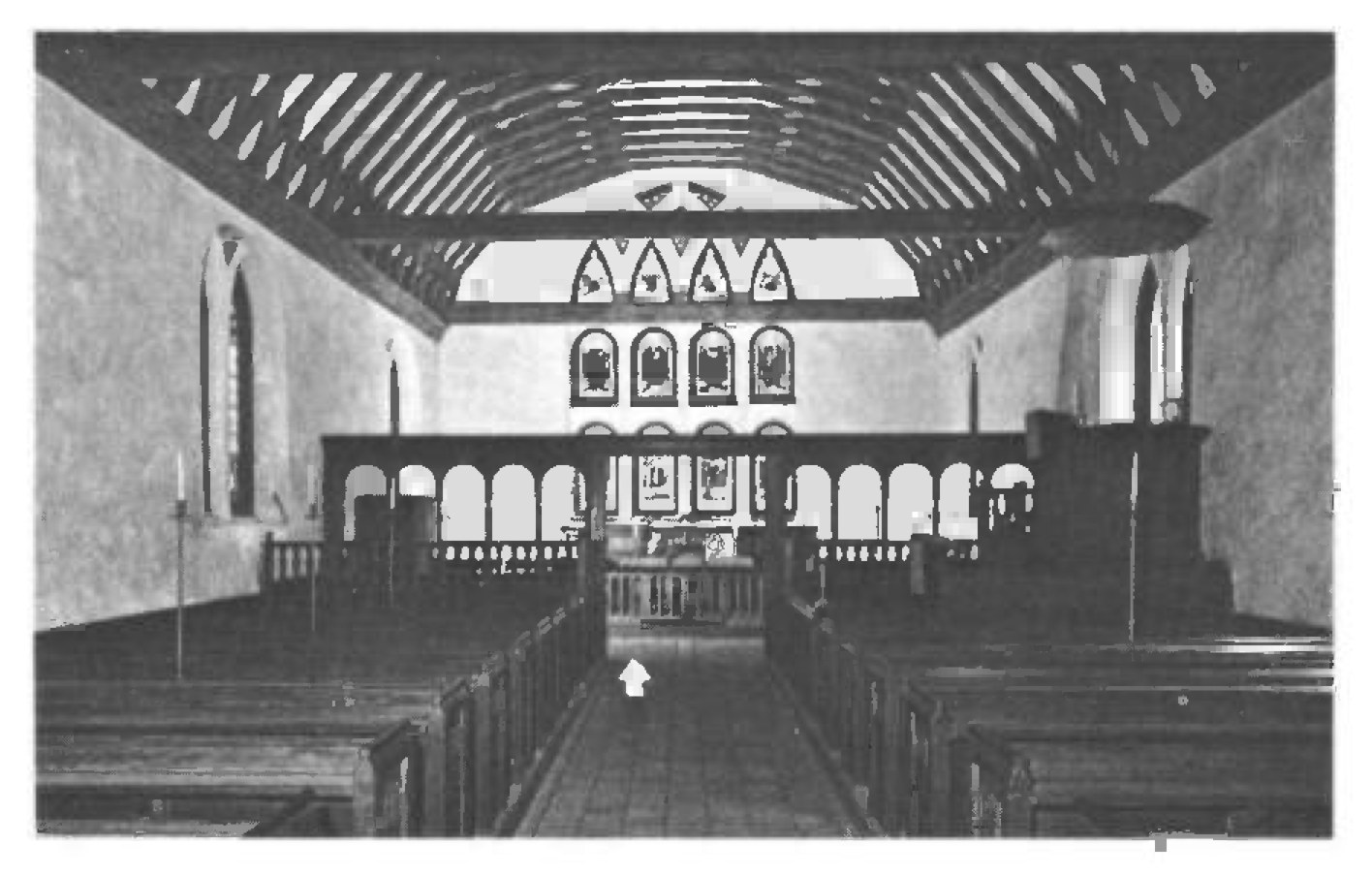
Today the Old Brick Church located four miles south of Smithfield, Virginia, on State Road 10, still stands and it is open daily to the public. The attractive and charming old structure has been described as “. . .the most precious building in America,” and remains one of the most continuing symbols of the history of the development of our nation. Its picturesque interior captures the setting of Angelican worship, and the famed communion table and chairs are among the rarest such works created by early craftsmen. The 17th century American silver baptisimal basin sets in a font hewn from a great log that has been carefully shaped by hand. On display also is an Elizabethan organ, lent by the Queen of England.
Importance of the Old Brick Church as a legacy was summed up by President Dwight D. Eisenhower in a letter to St. Luke’s October 12, 1956, in which he said:
“This monument to the founders of our country is in truth a national shrine. Visitors there, inescapably, will be reminded of the deep religious convictions of the first settlers, their faith in God and their faith in themselves as children of God. St. Luke’s, more than a time-hallowed relic of the past, will be an enduring witness to the spirit that animates them, for within its walls our forefathers gained new courage, fine persevernace, abiding strength to make of the wilderness a home for themselves and all who followed them.”
Joseph Bridger, probably one of the wealthiest and most influential men of his time, died on April 15, 1686. He left a very large amount of personal property and approximately 12,000 acres of land in Isle of Wight county. In addition, he also owned land in Surry and James City counties of Virginia and considerable acreage in the state of Maryland.
He was buried in a field near his home, White Marsh, located less than three miles from the Old Brick Church. A marble slab was erected at his grave and bore this inscription:
SACRED
To ye memory of The Honorable Joseph Bridger Esq. Councel of state in Virginia To King Charles Ye 2nd Dying April ye 15: A:D: 1686 Aged 58 years mournfully left His wife 3 sons and 4 daughters Does nature silent mourn & can dumb stone Make his true worth to future ages knowne Excels expression marble sure will keep His mem’ry best yet ever on his grave shall weep Here lies ye late great minister of State That Royal virtues had & Royal fate To Charles his Counsels did such honors bring His own express fetched him t’attend ye king His soul yet ever did with vigor move Nimble took wing, soared like it selfe above For ye bright stars ner’s laysily decline But in an instant shoot yet cease to shine.7
In the passing of time, White Marsh, the big plantation house, was occupied by various descendants of Joseph Bridger. However, it eventually fell into disrepair and was demolished, its handmade bricks scattered in the nearby field.
In 1887-1894, during the restoration of St. Luke’s church, it was discovered that only two gravestones were left in the old Bridger family cemetery at White Marsh. These two slabs marked the graves of Joseph Bridger and of Ann Randall, the latter believed to have been the aunt by marriage of Joseph’s wife, Hester (Pitt) Bridger. No other graves were identified. However, the remains of the two were reinterred in the chancel of the Old Brick Church, and the marble slab, which had stood at the head of Joseph’s grave for over 200 years, was placed over his tomb, as was that of Ann Randall. Today these two markers are part of the chancel floor and the inscriptions are still fairly legible.
Joseph is the only one of our early ancestors, Bridges or Thomas, whose grave I have been able to locate.
Joseph Bridger made his will August 3, 1683, and attached a codicil less than two months later that disinherited his oldest son, Joseph Jr., apparently for the part he played in Bacon’s Rebellion.
The will reads, with original spelling intact:
“In the name of God Amen: I Joseph Bridger of the Isle of Wight County in Virginia doe make this my last Will Testament.
Imprimis tis my Will that all my debts be in the first place carefully payd and for what then shall remaine of worldly Estate I dispose of as followeth
It is my Will that my personall Estate be equally divided betweene my Sonns Joseph Samuell & William and daughters Martha (Godwin) Mary and Elizabeth and Hester share and share alike only my daughter Martha Godwin is to have one hundred pounds lesse than the rest in respect of what I have already given her husband and alsoe theire mother and my deare wife shall have in the first place and before it is divided over and above her proportion at her Choice one Bed Coveringe and furniture to it halfe dozen Chaires a Chest of drawers: table and Carpett and lookinge glasse and Andirons to furnish her Chamber and one horse as shee shall Choose and one mare: and one Woman Servant white or blacke to waite upon her besides all her apparell Rings Jewells and appurtenances: this being done: then the personall Estate to be divided as aforesayd: Except alsoe the abatement of the hundred pounds of my daughter Marthas part shee beinge to have soe much lesse than the rest: and what Soever shall come to her of my Estate it is my will it shall remaine in her Sole and only disposeinge to give it as shee shall thinke fitt and nott in her husbands: and if her husband shall desire to be possest with it that then Care be taken that my daughters right to enjoy it be well secured else to remaine in my Executrixes hands till it be don: and all the above said shares are to remaine in the hands of my Executrix till they come to the age of twenty and one yeares: the daughters if they marie with their mothers Consent: sooner Else not and if any or another of them die before the age of one and twenty or haveing lawfull heyres then such person share to be equally divided amongst the rest viz my wife sonns daughters aforesaid: Item I give unto my Sonne Samuell the plantation and tract of Land bought by me of John Gatlin and William Gatlin whereon John Cooke now liveth and alsoe one halfe of my plantation of Curawoak being seaven thousand Eight hundred acres of land to be equally layd out and the plantations and houseinge that is now seated thereon to be included in the one halfe given to him the sayd lands I say I give to him for and dureinge his naturall life and from and after his decease to the heyres of his body lawfully begotten Item I give unto my Sonne William all that tract of Land Granted me by Escheate being 850 acres formerly belonginge to Natha: ffloyd (Except what is disposed of by me part of which beinge least out by me to ffrancis Hobbs: Mrs. Dorothy Bond & William Blunt alsoe the two tracts of Land taken up by Coll Pitt Mr. Wm Burgh and my selfe Conteyneinge three thousand acres: Except Six hundred thereof sould by me to Lt Coll John Pitt: part of which Thomas Mandue: Richard Parker Wm Woorrell Richard Jones Thomas Reves Robert Sturdy and others hath least of me I say I give ye said lands and every part thereof with the above plantation to my Sonne William and for and dureinge his naturall life and from and after his decease to the heyres of his body lawfully begoten Item I give to my Sonne William that tract of land belonginge to me part of which I have least to Christopher Wade: to him and his heyres lawfully begotten: Item it is my Will that if either of my sd Sonns: Samuell or William die before they attaine the age of one and twenty yeares and with out heyres lawfully begotten of theire bodyes that then all the lands given as aforesaid I give unto the Survivor of them for and dureinge his naturall life: and from and after his decease to the heyres of his body lawfully begotten and it shall not goe to theire Elder Brother Joseph but through default of such heyres and then to him only dureinge his naturall life: and from and after his decease to the heyres of his body lawfully begotten: Item for the tract of Land whereon I now dwell with of 850 acres formerly belongeinge to Capt Upton and that of 300 acres formerly belongeinge to Mr. Seward on wch Mr. Izard ould phillip and Wm Lewes lived I give unto my loveinge Wife for and dureinge her naturall life (She keepeinge the Bricke houseinge and orchard in repaire with all the Tenements thereto belongeinge that she may the better be able to maintaine her selfe and children till they are 21 yeares of age or that they marrie and from and after her decease I give ye sayd lands and Tenements to my Sonne Joseph Bridger: with the other halfe of my lands at Curawoak for and dureinge his naturall life: and from and after his decease to the heyres male of his body lawfully begotten and for want of such to my Sonnes Samuell and William Successively for and dureinge theire naturall lives and from and after theire decease to the heyres male of theire bodies lawfully begotten
Item I give my Sonne Joseph my tract of land at Monakin and the heyres of his body lawfully begotten
I give unto my Mother Mrs. Mary Bridger five pounds yearely dureinge her life as a token of my duty and remembrance of her. It is my desire that Lt Coll Jno Pitt and Coll Arthur Smith will assist my wife on all occasions to whome I give twenty shillings apeece to buy them .Rings Hereby appointing my loveinge Wife Hester Bridger my Executrix of this my last Will Witnesse my hand and Seale this 3d day of August 1683. Witnesse James Bennett Robert Pitt Samuell Lucke Seale Richard X Glover his marke
Since the makeinge of my Will on the two other sides of this sheete of paper, I finde my Sonne Joseph Bridger fly out into divers disloute courses of life and is grown very disobedient to me and that I may not be guilty of giveinge him an estate & an encouragement to Continue for the future in his wicked way of liveinge I do hereby therefore revoke and disanull all and Every part of the legacies given him in the Will aforesaid both of lands and my personall Estate and doe give the lands and houseinge where I now dwell and the 850 Acres formerly belongeing to Capt Upton and the 300 Acres formerly belongeing to Mr. Seward on which Mr. Izard ould phillipse and Wm Lewes lived with all the Tenements and whatever thereto belonges after my wifes decease to my Sonne Samuell Bridger dureinge his naturall life and after his decease to the heyres male of his Body lawfully begotten and for Want of Such heyres I give it to my Sonne William for his naturall life and after his decease to the heyres male of his Body lawfully begotten ffor the one halfe of the land at Curawoak given to my Sonne Bridger and the land at Manokin I doe hereby revoke the Sayd guift and hereby give it to my Sonne William dureinge his naturall life and after to the heyres male of his Body lawfully begotten and for want of Such heures to my Sonne Samuell dureinge his life and then to the heyres male of his Body lawfully begotten for yt part of my personall Estate given to my Sonne Joseph in the said Will I doe hereby revoke the sayd guift and give that part amongst my wife and the rest of my children: Viz) Samuell, William, Martha Mary and Hester and Elizabeth to be equally divided amongst them it is my will my Sonne Joseph shall have payd to him yearely dureinge his naturall life two thousand pounds of Tobacco and Caske out of the rents comeinge in from my lands and to be taken proportionably from every Tract of land accordinge to the Tenements thereon which my Executrix and those it is given to: and to take care it be paid accordingly and this is in full wch I intend he shall have hereby revokeinge all guifts and grants to him of any lands or personnall Estate what Soever WITTNESS my hand and Seale this 18th of October 1683. Witnesse James Bennett Robert Pitt Samuell Lucke Richard X Glover Seale his marke
This Will is proved in Every part by the oaths of James Bennett Richard Glover and Samuell Lucke in Court held for the Isle of Wight County may the 8th 1686: that it is the Will of Coll Joseph Bridger decd and the Codicill that is to the Will annext. Test John Pitt ClCur.
Know all men by these presents that I Joseph Bridger of the Isle of Wight County in Virginia Esqr doe for divers good Causes and Consideration me there unto moveinge declare and it is my Will that my Eldest Sonne Joseph Bridger is by me disinherited and Soo disinherited that neither he nor any Children of his whether male or female shall have and possess any part or portion of any the lands or Tenements I now stand possed of or hereafter shall have and possess and I doe hereby declare it is my Will that all my lands and Tenements within this Collony of Virginia or Maryland and Every” past thereof I doe give to my two Sonns Samuell Bridger and William Bridger to them and theire heyres lawfully begotten of theire bodies or as I shall thinke fitt to appoint each his part of the same and if noe Such appointment be made by me then to be divided betweene them Saveinge my wifes right dureinge her life and doe further declare and it is my will that my Eldest Sonne Joseph Bridger shall have after my decease five pounds Sterlinge paid him out of my personall Estate by those shall have the management thereof and noe more and it is my will that that five pounds shalbe all what he shall have out of my Estate reall or personall that at my decease shalbe longe to me and it is my will and I declare it againe that neither my Sonne Joseph Bridger nor any child of his whether male or female shall have out of my Estate reall or personall more than the five pounds afforesaid never the lesse I do reserve to my selfe power to alter this in all or part as I shall see fitt anythinge Conteyned herein to the Contrary not withstandinge and this I doe acknowledge in open Court held for the Isle of Wight and desire it may be recorded least I dyinge without a Will or that a Will should be imbeszelled or forged my said Sonne Joseph Bridger or his heyres whether male or female should pretend to any of my Estate reall or personall more than the five pounds afore Sayd in witnesse hereof I have Sett my hand and Seale this 9th of Aprill 1685. Acknowledged in open Court held for the Isle of Wight County Aprill the 9th Seale by Coll Joseph Bridger Esqr to be his Will and Ordered to be recorded Test John: Pitt ClCur”8
Most of the children of Joseph and Hester (Pitt) Bridger married and settled down in Isle of Wight County, largely on the property they had inherited from their father when he died.
They were:
- Martha — married Thomas Goodwin of Nansemond County.
- Mary—married Richard Tibboth, captain of the ship “Mary and Anne.”
- Elizabeth—married Thomas Lear of Nansemond County.
- Hester—married George Williamson of Isle of Wight County.
- Samuel — married Mrs. Elizabeth Woory, widow of Joseph Woory in 1683.
- William—married Mrs. Elizabeth (Allen) Caufield of Surry County in 1727.
- Joseph Jr. - married Elizabeth Norsworthy. The Kentucky Bridges line descends through him.
In order to settle the estate of Joseph Bridger Sr., an inventory was made of his property. Items included in this inventory indicate that Joseph Bridger was one of the wealthiest men in Isle of Wight County. In describing the house, the inventory read: “four rooms on the first floor, including the children’s chamber and the dining room, with two rooms in an upper story.” Also a “new house” is listed in which there was a hall, parlor and the lower chamber on the first floor, and on the second floor three rooms and a “gallery” or hall. All rooms and the halls in both houses were fully furnished. The kitchen with two additional rooms was apparently separated from the main house as was the custom in those days.
Joseph Bridger also operated a mercantile business in a storehouse nearby. This building contained an outer room, a supply room in the rear and a storeroom above. In addition, there was a brick warehouse with storage space on the second floor. Merchandise brought from England was unloaded at the landing on the James River and the inventory listed 800 “painting tiles” among other items stored there.
The inventory also listed a sloop with a capacity of 28 hogsheads, apparently used for shipping tobacco. It was equipped with “furniture, sails, rigging and ground tackle,” obviously ready to sail at a moment’s notice. Tobacco was picked up at the planters’ own wharf after the sloop had been unloaded of its goods from England. Joseph’s own agents, Micajah Perry and Thomas Lane were in charge of his shipping operations.
A cattle raiser as well as a tobacco grower, Joseph had the following livestock to dispose of at his death: 54 head of cattle, seven calves, 13 cows and five yearlings for dairy purposes, eight oxen for doing the heavy work, nine steers and four bulls; 54 old hogs, young hogs, sows, shoats and pigs, seven sheep and 14 horses.
Among Joseph’s personal property was 490 ounces of silver, sixty pounds of Spanish money and 42 pounds ten shillings of English money.
Several people owed him money at the time of his death including: Colonel William Byrd, 12 pounds; John Pleasants, five pounds; John Champion, 958 pounds of tobacco; Thomas Pitt, his brother-in-law, 2,000 pounds of tobacco; Colonel Christopher Wormeley in a bill of exchange totaling eight pounds, and Perry & Lane, London, bills of exchange to Joseph’s credit totaling 654 pounds.
Help in running the house included four indentured servants with existing terms of service (seven years was the usual limit) and 13 Negroes including two small children.
Household items listed in the inventory included: numerous brass and iron andirons, tongs and fire shovels; candlesticks, of brass, wire and silver; chairs caned, leather covered, and couches upholstered with serge or turkey-work; assorted tables, a great looking glass, a number of chests, chests of drawers and numerous pictures.
Other furnishings included bedsteads with feather bedding, bolster and pillows, some with valences and curtains, blankets, sheets and quilts. There was carpeting in the “great hall” of the new house, also a clock and three sets of scales.
A generous supply of napkins and table linen was listed in the dining room as well as pewter tableware including some four dozen plates, a porriger, chafing dish, dish plates and pie plates. Silver pieces included a punch bowl, candlesticks, serving dish, several spoons and a tobacco box cover.
Among the volumes in Joseph’s library were books on witchcraft and astrology.
In addition to his usual possession of firearms for family protection, Joseph Bridger, as a high ranking officer in the Isle of Wight militia left several hand guns, a case of pistols and holsters, a pair of pocket pistols, a cutlass, three rapiers, one with a hilt of silver, and a stock of ammunition.
Clothing included a parcel of Virginia-made cloth and 14 pairs of Virginia stockings, probably woven on the plantation.
Apparently the Bridger household was well fed as the kitchen contained a very large fireplace at one end of the room, and equipment included two great copper kettles one of which weighed 61 pounds; four pot hooks, a heavy mall, three spits and skillets of various sizes, and in the adjoining milk room were 11 milk pails, earthen pans and earthen butter pots.
Last but not least was the cellar where the “lord of the manor” kept his liquor supply. This included cider for family use, a cask of brandy, a cask of old whiskey and a worn-out malt mill.
The inventory of the Bridger store was quite a revelation, particularly as to the variety of items carried for sale in the 17th century. Wearing apparel, accessories of dress, utensils and farming tools, most of which was imported from England, dominated the list. Nearly a score of different fabrics were available in quantities for making clothing, sheeting and other uses. Also on the shelves of the Bridger store was calico, flannel, broadcloth and silk, and knitting needles, pins, combs, knives and scissors. Edging, assorted colored tapes and buttons, ready for the trimming of garments, was in large supply as was soap.
Building supplies—nails, hoes, axes and whipsaws were listed in abundance, and home furnishings included feather ticking, rugs, blankets, curtains, 55 bushels of salt and a barrel of coarse sugar.
Wearing apparel ready made included shoes for men, women and boys, also hose among which were four pair “moth-eaten.”
Horse collars, harness, bridles, bits, halters, girths and saddles rounded out the inventory, all except the stock of drink. The Bridger store’s inventory listed six barrels and one hogshead of rum — approximately 255 gallons, and 65 gallons for “Colonel Powell’s hands.”9
No estimate was made as to the value of the complete estate, but obviously it was quite large. It was divided according to the will, and the shares in the estate of General Bridger’s three married daughters were claimed by their husbands, as was the custom in those days, and are recorded by items. Descendants of his children continued to live in Isle of Wight County, largely on the estate he had amassed during his more than 30 years of life in Virginia.
“17th Century Isle of Wight County,” by John Bennett Boddie, Genealogical Publishing Co., Baltimore, Md., reprint, p-423.↩︎
Virginia Journals, page 23.↩︎
Nugent’s,. pages 433; 599.↩︎
W. W. Hening, Statues at Large of Virginia, 1619-1792 (13 vols) Vol. II, page 328.↩︎
Richmond, Va., Dispatch, July 6, 1890.↩︎
In a letter to the author, dated May 11, 1971.↩︎
“Old Brick Church,” by R. S. Thomas, Smithfield, Va., Virginia Historical Collection, 1892, page 14.↩︎
Isle of Wight County Deed and Will Book 1, Vol. 2 page 250.↩︎
“Domestic Life in Virginia in the 17th Century,” by Annie Lash Jester, Virginia 350th Anniversary Celebration Corp., Williamsburg, Va., 1957, pages 35-41, from collection of Miss Mary Hamiltonbama.↩︎